
Bodywork Technologies® exists to connect hearts and minds through touch. Sometimes that touch is physical. Sometimes it is the moment a person feels welcomed, recognizes something new in their community, or discovers that taking care of themselves can actually be fun.
This week, those different forms of connection converge at SLV PrideFest.
Player 1, Your Recovery Lounge Is Ready
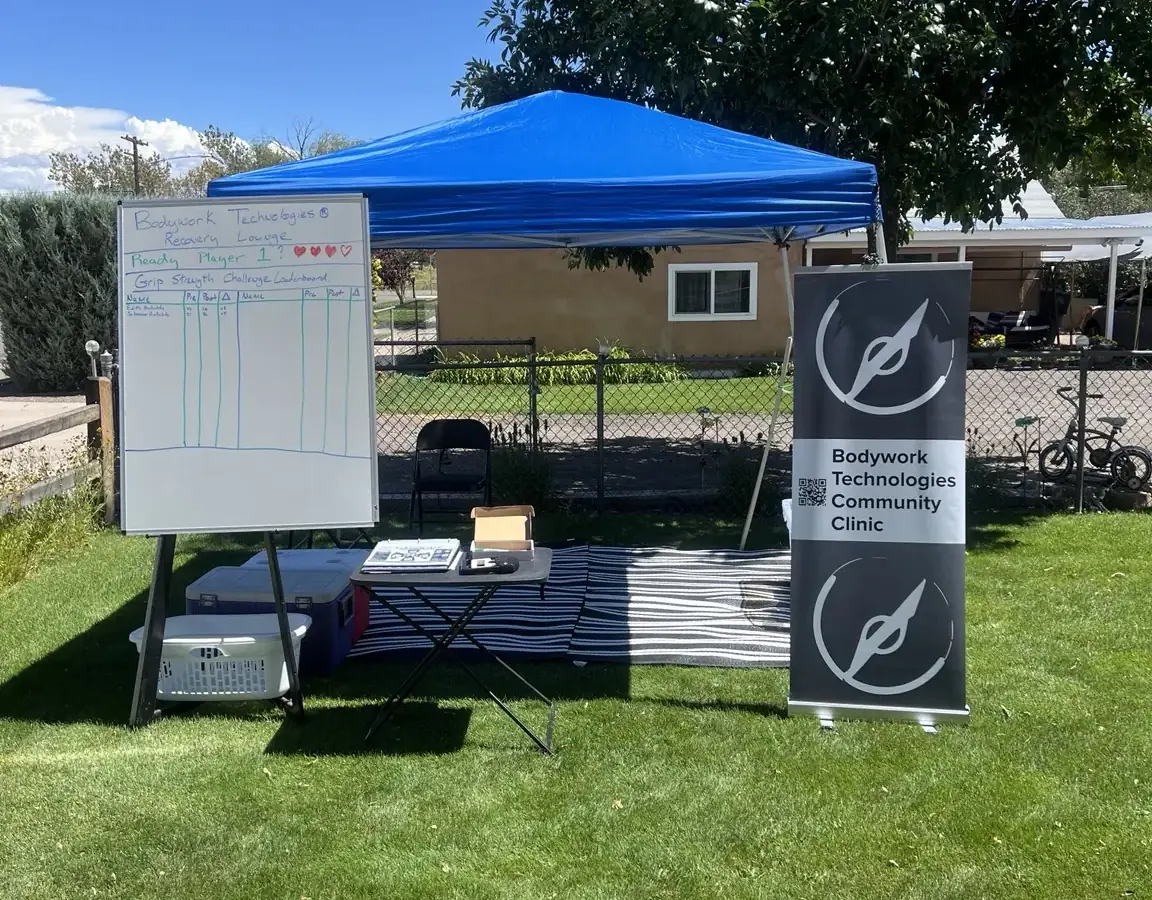
On Saturday, August 29, Bodywork Technologies® will debut its free 30-Minute Recovery Lounge during SLV PrideFest 2026 ↗, from 11 a.m.–4 p.m. at Cole Park in Alamosa.
Part wellness experience and part retro game, the Recovery Lounge invites each visitor to become Player 1 and explore four short levels of movement, recovery, and self-care.
The idea grew from a simple question: What if recovery felt less like another task to perform correctly and more like a game you were curious to explore?
Every station offers a clear purpose, a simple sequence, and options that allow people to participate at their own comfort level.
How to play
- Station 1: Grip Strength—Pre-Test
Begin with a grip-strength reading and record your starting score. Players who enjoy friendly competition may also join the optional Grip Strength Challenge leaderboard.
- Station 2: Roll & Release
Explore foam rollers and self-release tools while noticing areas of tension, pressure, and comfort.
- Station 3: Stretch & Strengthen
Try simple, adaptable movement options that encourage mobility, stability, and body awareness.
- Station 4: Recover
Slow down, hydrate, cool off with a cold recovery towel, and notice how your body feels after completing the course.
- Return to Station 1: Grip Strength—Post-Test
Retest your grip and compare it with your opening score. A score may rise, fall, or remain unchanged; the comparison is a playful observation, not a medical assessment or proof of improvement.
Each completed station restores a fragment of the player’s symbolic Recovery Heart. Complete all four levels and notice what changes along the way.
The complete sequence is designed to take approximately 30 minutes, requires no appointment, and costs nothing. Players are encouraged to try the full course, but every activity is optional and can be adjusted or skipped.
The Lounge cannot diagnose an injury, provide rehabilitation, or replace individualized healthcare. It can offer a welcoming place to pause, experiment with simple self-care tools, learn something about your body, and share a little friendly competition with the people around you.
Stop any activity that causes pain beyond mild, comfortable “feel-good” discomfort. Anyone with an injury, recent surgery, medical condition, or questions about whether an activity is appropriate should consult a physician or other qualified healthcare professional.
Every Body Belongs Here.
Retro Games. Real Recovery.
Bring the game to your event. Would the Recovery Lounge fit your festival, workplace, conference, community gathering, or special event? Email Bodywork Technologies to start a conversation.
Foot Traffic First: When the Game Map Becomes a Community Map
The Recovery Lounge turns self-care into exploration. Foot Traffic First applies the same curiosity to Alamosa itself.
Foot Traffic First is Phase 1 of a larger community wellness initiative designed to create connection and build a healthier community network by encouraging people to walk, explore, gather, and participate in Alamosa.
Its opening question was simple: What happens when playing Pokémon GO turns into mapping a community?
Using Wayfarer—the community-mapping platform originally developed by Niantic and now part of Scopely’s games business—eligible local art, parks, trail markers, historic features, recreation areas, and gathering places can be nominated as Wayspots. Approved Wayspots may appear in location-based games such as Pokémon GO, subject to each game’s inclusion rules.
What began as an effort to improve the local game map gradually became an informal inventory of Alamosa’s social, cultural, recreational, and historic infrastructure.
In roughly one month, nearly 30 Alamosa-area points of interest were identified, accepted as Wayspots, and published within the live location-based gaming system.
The result suggests that many local landmarks were missing from the digital map—and shows how quickly they can gain new visibility once somebody begins looking for them.
Pokémon GO reached more than 100 million unique players in 2024, with more than 20 million weekly players across over 190 countries and regions. Players have collectively traveled more than 30 billion miles, while the Wayfarer community has added more than 11.5 million Wayspots since 2019. Scopely reports these figures here ↗.
Those figures do not guarantee local tourism, spending, or increased foot traffic. They do demonstrate the potential of location-based play as a placemaking tool. A mural can become a destination. A trail marker can encourage someone to walk farther. A historic feature can reveal a story someone previously passed without noticing.
The next phase will look for gaps neighborhood by neighborhood and explore how these destinations can work together as natural walking routes and gathering spaces.
Side Quest Unlocked: The Former Rio Grande Rail Yard
As often happens in a good game, the Foot Traffic First mission unlocked a side quest. Apparently, digital mapping has no respect for project boundaries.
The traces of Alamosa’s former Rio Grande rail yard along East Sixth Street raised a question: Could thoughtful stewardship and interpretation help people imagine what stood there—and what could come next?
Alamosa developed around the railroad. Its historic depot now houses the Alamosa Welcome Center ↗, while structures and routes still carry pieces of that history. The depot’s National Register documentation (PDF) ↗ provides additional context.
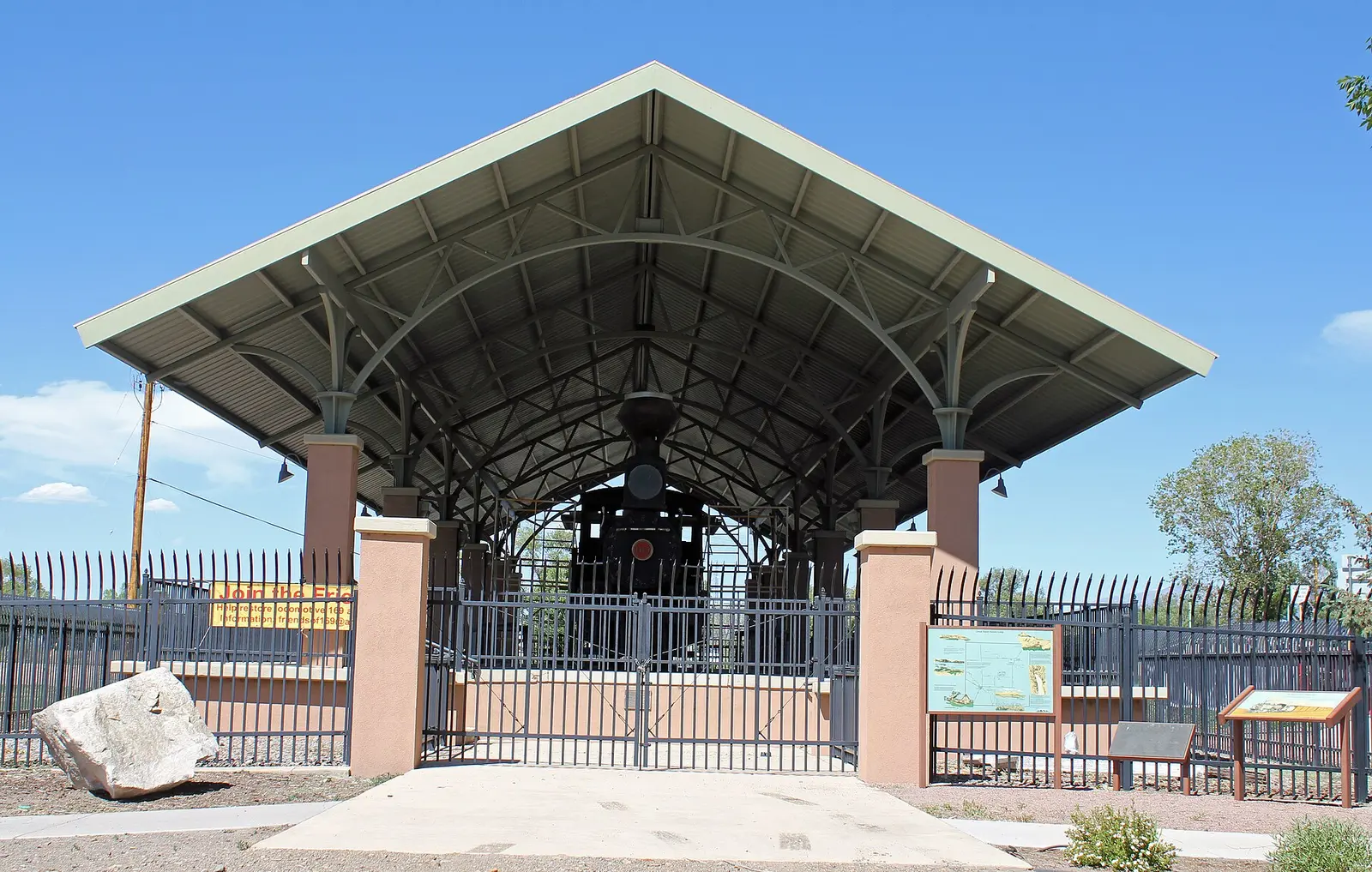
One exploratory route could extend approximately half a mile east from the depot to the dead end of East Sixth Street and a possible rail-yard interpretive site. Another roughly half mile could continue north along the Rio Grande corridor toward Locomotive No. 169 in Cole Park.
Congratulations: you followed the game map and accidentally found the transportation system that helped build the city.
A possible westward extension could connect the depot toward Zapata Park. Near the present park once stood the Mexican Preparatory School connected to the 1914 Maestas v. Shone case. Railroad employee Francisco Maestas challenged the requirement that his son Miguel cross the tracks to attend the segregated school rather than the closer public school. The decision became one of the country’s earliest successful Mexican American school-desegregation cases. Rocky Mountain PBS ↗ and the Maestas Case project ↗ preserve more of that history.
The route could therefore reveal more than where trains moved. It could help explain how the railroad shaped where people lived, worked, learned, crossed boundaries, and organized for change.
No trail route, interpretive site, funding, or construction has been approved. Please do not enter railroad property or begin independent cleanup.
There is no construction crew hiding in the bushes, and no secret experience points have been awarded. For now, it is simply an invitation to look more closely.
Sometimes digital mapping helps us notice what is already on the map—and the traces of what used to be. Sometimes it points toward what the community might become next.
Co-op Mode: Building the Human Network
Maps and trails connect places. People still have to connect those places to one another.
The Young Professionals of Alamosa ↗, supported by the Alamosa County Chamber of Commerce, is entering a new chapter. Bodywork Technologies founder Jose Orozco serves as a board member.
The aim is not to find one heroic player willing to carry the entire organization. It is to build something closer to a self-supporting bridge: people contributing according to their strengths, interests, relationships, and available capacity while supporting one another where help is needed.
Community involvement often begins when someone who once felt uncomfortable attending alone starts recognizing familiar faces—and eventually becomes the familiar face who helps the next newcomer feel welcome.
The board provides a starting structure, not a closed door. People interested in social activities, volunteer opportunities, professional development, community involvement, or simply meeting others are invited to join the next conversation at 6 p.m. on Tuesday, September 1, at Lucha’s Cantina & Speakeasy ↗ in Alamosa.
Community networks grow through repeated points of contact: showing up, listening, recognizing one another, and making room for another person to enter the game.
Bonus ItemZucchini
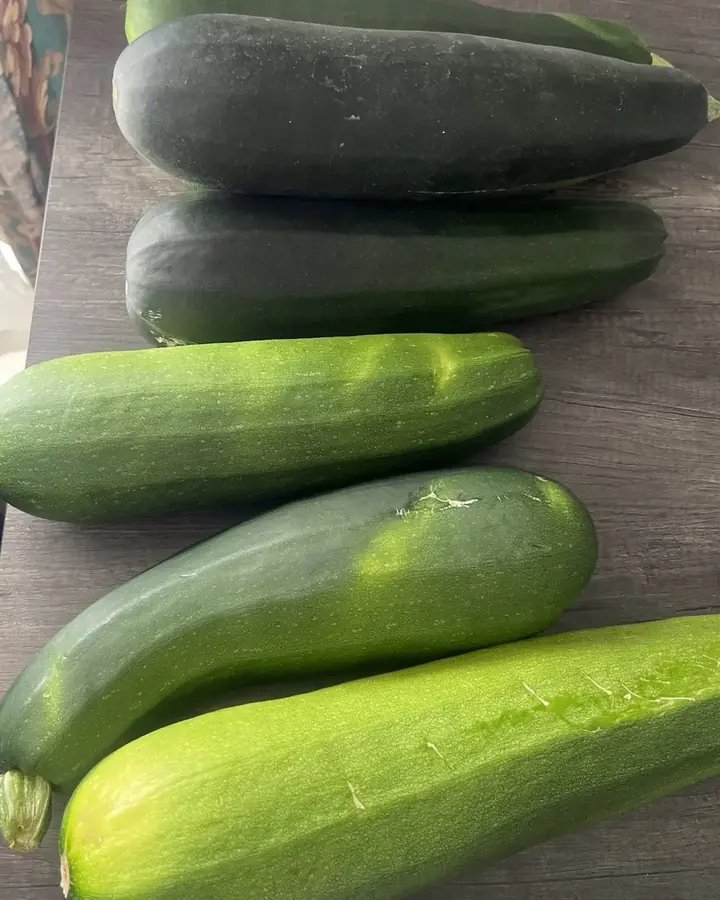
Why zucchini? Because recovery and community wellness are also built through ordinary acts: planting, tending, harvesting, preparing food, and sharing what grows.
Squash was domesticated in the Americas thousands of years ago. After Cucurbita pepo reached Europe, Italian gardeners and cooks continued selecting it; the elongated summer squash now recognized as zucchini emerged as a distinct cultivar group in nineteenth-century Italy. Published horticultural research traces that development ↗.
For Colorado gardeners, zucchini prefers full sun, warm soil, and consistent water. Plant after frost danger has passed and the soil has warmed to approximately 60°F. Summer squash generally needs about 50–65 days before producing. Harvest while the skin remains tender and seeds are small—unless your goal is to discover a small green watercraft beneath the leaves. CSU growing guidance ↗ and harvest guidance ↗ offer more detail.
One cup of raw, chopped zucchini contains approximately 21 calories, 1.5 grams of protein, 1.2 grams of fiber, 324 milligrams of potassium, and 22 milligrams of vitamin C. It is a hydrating vegetable, not a complete recovery meal, so pair it with protein and a satisfying carbohydrate. Values are based on USDA FoodData Central ↗ data and may vary slightly by sample.
Simple Air-Fried Zucchini
Quarter zucchini lengthwise. If it is oversized, remove some of the mature seed center. Toss with olive oil, garlic, smoked paprika, oregano, salt, and black pepper. Air-fry at 400°F for approximately 10–15 minutes, turning once, until browned at the edges but still firm. Cooking time will vary with thickness and appliance.
Serve it beside a simply seasoned pork steak and half a baked or mashed potato.
Quest LogWhat’s Coming Up
| Date and time | Event | Location |
|---|---|---|
| Thu., Aug. 27, 5–8 p.m. | Pizza & PrideFest Prep Night | Cole Park |
| Fri., Aug. 28, 4–7 p.m. | Pre-Kick-Off Reading Party | Cole Park |
| Fri., Aug. 28, 5 p.m.–2 a.m. | PrideFest Kick-Off Party; family-friendly hours 5–7 p.m. | SLV’s TEA Spot |
| Sat., Aug. 29, 10 a.m. | People-Powered March | Meet at Alamosa Public Library |
| Sat., Aug. 29, 11 a.m.–4 p.m. | SLV PrideFest and Recovery Lounge | Cole Park |
| Sat., Aug. 29, 7 p.m.–midnight | Official PrideFest After Party | Lucha’s Tacos / Cantina & Speakeasy |
| Sun., Aug. 30, 9–11 a.m. | Drag Brunch | SLV Brewing Company |
| Tue., Sept. 1 | Bodywork Technologies Alamosa clinic date—plenty of openings remain | Alamosa |
| Tue., Sept. 1, 6 p.m. | Young Professionals of Alamosa gathering | Lucha’s Cantina & Speakeasy |
| Fri.–Sun., Sept. 18–20 | Bodywork Technologies Denver clinic dates—September’s only Denver trip; appointments are already filling | Denver |
| Tue., Sept. 22 | Bodywork Technologies Alamosa clinic date—plenty of openings remain | Alamosa |
| Tue., Sept. 29 | Bodywork Technologies Alamosa clinic date—plenty of openings remain | Alamosa |
View the complete official SLV PrideFest schedule ↗ or book an Alamosa or Denver appointment ↗.
Final ScreenContinue?
This week’s projects may look different—a recovery game, a digital map, an imaginary rail trail, a developing human network, and one zucchini that clearly ignored portion control.
Underneath them is the same work: creating approachable opportunities for people to notice themselves, discover their surroundings, recognize one another, and participate in the places they share.
That is how Bodywork Technologies® continues its mission:
To connect hearts and minds through touch.